The Chronicle
Latest dispatches
204 results across all types
 video
videoFinally, Trophy Wine Hunter is returning to Bordeaux October 1-3, 2026
 video
videoChateau La Lagune 1995 Cork, Bottle & Color of Wine. See my full review on my YouTube channel
 video
videoBordeaux Growth Wines: Video #2 of 61 - Chateau La Lagune 1995 (3rd Growth, Haut Medoc)
This is video #2 of 61 which will cover all of the growth wines of the 1855 Classification System All pictures used in this video come from the Chateau La Lagune website Description written by Chat GPT Founded in the early 18th century, Château La Lagune has long been regarded as one of the jewels of the Haut-Médoc. The estate flourished under the ownership of the distinguished de Seze family before falling on difficult times in the aftermath of World War II. Economic hardship, coupled with the devastating Bordeaux frost of 1956, left the vineyard in dire condition. By the time Georges Brunet acquired the property in 1958, a mere five hectares of vines remained. Brunet embarked on an ambitious restoration, replanting the vineyards and expanding the estate through the acquisition of neighboring Petit La Lagune. He also restored the château's historic name after the wines had been marketed as Grand La Lagune during the 1950s. Financial pressures eventually forced Brunet to sell the e
 video
videoWines I Drank in July 2026
 video
videoChateau Lafleur 2013 Trophy Wine Review
Description Written by ChatGPT Few estates in Bordeaux command the reverence reserved for Château Lafleur. Founded in 1872, this tiny 4.5-hectare vineyard in Pomerol has long been one of the region's rarest and most distinctive wines, producing only around 1,000 to 1,200 cases of its Grand Vin each year. Its remarkable vineyard, planted equally to Merlot and Cabernet Franc, sits on a single uninterrupted parcel of sandy clay and gravel, a unique terroir that consistently delivers wines of exceptional finesse, silky texture, and striking mineral precision. The history of Lafleur is one of quiet dedication rather than commercial ambition. Henri Greloud, owner of Château Le Gay, first acquired the vineyard that would become Château Lafleur. After passing through the Robin family, André Robin embraced the philosophy that continues to define the estate: Qualité passe quantité—quality surpasses quantity. His daughters, Marie and Thérèse Robin, managed Lafleur from 1946 for nearly four deca
 video
videoTrophy Wine Night July 10, 2026
Another great wine night. This time at Botanist Restaurant, Vancouver, B.C. One of friends is a VIP and we got the private room, which was such a nice luxury. Our lineup of wines: Veuve Clicquot 1982 Cave Privee Vilmart 2006 Grand Cellier D’Or Brut Premier Cru Dom Perignon P2 2006 Chateau Lynch Bages 2003 Chateau Kirwan 2005 Le Macchiole 2013 Paleo Rosso Chateau Lafleur 2013
 video
videoSaturday Night Wine Night
 video
videoOrnellaia 2015 Trophy Wine Review
Ornellaia was established by Marchese Lodovico Antinori of the Antinori family. The property is adjacent to Tenuta San Guido, producer of Sassicaia. The vineyards of the estate were planted in 1981, producing the first vintage in 1985. A modern winery was built in 1987. Lodovico Antinori's cousin Nicolò Incisa's owns Sassicaia, and his older brother Piero owns Tignanello/Solaia. The estate also produces a second wine, Le Serre Nuove, which uses the same grape varietal but Le Serre Nuove has more Merlot in its blend. They also produce an entry level wine called Le Volte, which is blend of Cabernet Sauvignon, Merlot and Sangiovese as well as a super premium Merlot wine called Masseto . Robert Mondavi Winery took a minority interest in the estate in November 1999, and became full owners by 2002. They then partnered with the Frescobaldi family. Constellation Brands bought Robert Mondavi in around 2004 and then sold their interest in Ornellaia to the Frescobaldi family in 2005. The
 video
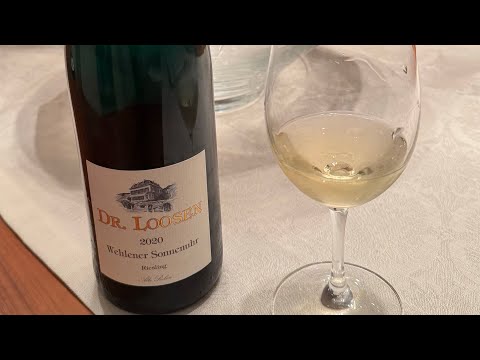
videoDr. Loosen 2020 Wehlener Sonnenuhr Riesling GG Alte Reben German Wine
 video
videoDr Loosen 2020 Wehlener Sonnenuhr Riesling GG Alte Reben Wine Review
Description written by Chat GPT Family-owned for more than 200 years, Dr. Loosen has been guided by Ernst Loosen since 1988, whose stewardship has elevated the estate to the forefront of Germany's finest Riesling producers. The Wehlener Sonnenuhr vineyard takes its name from the historic sundial built into the steep hillside in 1842 by Ernst Loosen's great-great uncle, Jodocus Prüm. The sundial, a gift to the village of Wehlen, serves as both a landmark and a testament to the vineyard's ideal southern exposure. Produced from old vines rooted in the blue slate soils of the middle slopes overlooking the Mosel, this Grosses Gewächs—the estate's highest classification for dry Riesling from a Grosse Lage vineyard—represents the pinnacle of Dr. Loosen's winemaking. The 2020 Wehlener Sonnenuhr GG opens with an intensely aromatic bouquet of white peach, ripe citrus, green apple, and delicate white flowers, underscored by smoky flint and wet slate. The palate is concentrated yet remarkably p
 video
videoMy Rant on Michelin Rating Wines
 video
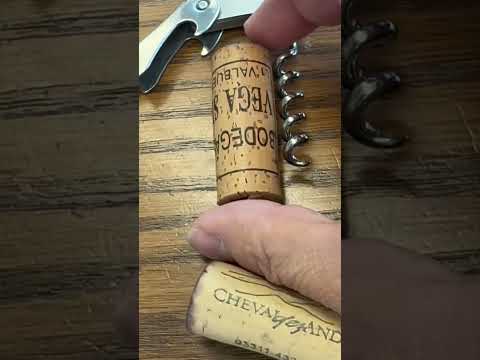
videoFIFA World Cup Special Tasting: Cheval Andes 2016 (Argentina) vs Valbuena No.5 2017 (Spain)
In celebration of the FIFA World Cup final, thought I would do a fun tasting of a premium Argentina and Spain wine. Of course, one is not better than the other and there is no winners here but just 2 very good premium wines. Representing Argentina is Cheval Andes 2016. Cheval des Andes is a joint venture established in 1999 between Cheval Blanc and Terrazas de los Andes, who are pioneers in cool climate, high altitude winemaking in Argentina. It is considered the Grand Cru of the Andes. Cheval des Andes has 50 hectares of vineayards at 2 sites: Las Compuertas in Luján de Cuyo and La Consulta, in the Uco Valley Las Compuertas lies on an altitude of 1,070 meters (3,500 feet). It has low rainfall, while its altitude allows for a cooler climate with high diurnal temperature variation. It has alluvial, deep silty-loam soils composed of: sand (36%), limestone (48%) and clay (16%). This vineyard with deeper soil are particularly well-suited for Cabernet Sauvignon because greater dep
 video
videoWhy People Break Trophy Wine Corks
 video
videoSpecial World Cup Argentina vs Spain Wine Tasting to be released July 19, 2026 at 10 am PST
 video
videoCastello Di Ama 2016 Chianti Classico Gran Selezione San Lorenzo
Castello di Ama is located at the sight of an original castle that was destroyed in the 15th century. The current buildings that Castello di Ama occupies were built in the 1700s. The winery was restored by the Carini, Tradico and Sebasti families in the early 1970s. The current CO is Lorenza Sebasti (since 1993) and the current winemaker is her husband Marco Pallenti (since 1982). Marco is the president of the Chianti Classico Consortium and was instrumental in setting stricter standards for Chianti Classico Riserva and creating the Gran Selezione designation. The winery owns 75 hectares of vineyard that lie between 420-527 metres above sea level. In total the winery produces around 27,000 cases of wine. The wine, Castello di Ama Chianti Classico Gran Selezione is name after a chapel in the village of Ama. The grapes are taking for all 4 of Castello Di Ama's major vineyards, one of which is called San Lorenzo. So this is not a single vineyard bottling. The blend of grapes is 8
 video
videoAuthenticating Chateau Lafleur 2013
 video
videoLast Chance to Use Summerland Waterfront Resort Discount Code
Last Chance to Use Discount Code for @summerlandresort For vieweers and subcribers, the resort has offered a discount code. Use the link below with the code TROPHY and receive 10% discount on your room booking. Offer valid for bookings made prior to July 19, 2026 but it is valid for check in dates up to April 30, 2027. Feel free to share this post! https://reservations.verticalbooking.com/premium/index.html?id_stile=20382&lingua_int=usa&id_albergo=26989&dc=9904&generic_codice=TROPHY Promo Code: TROPHY #summerlandwaterfrontresort #discountcode #summerland
 video
videoTrophy Wine Hunter is visiting Chianti Classico!
 video
videoFriday Trophy Wine Night
 video
videoChateau Pichon Baron 2005 Wine Review
Chateau Pichon Baron was established when Therese de Rauzan, daughter of the founder, received the estate as a dowry when she married Jacques de Pichon Longueville, the first President of the Bordeaux Parliament. Baron Joseph de Pichon Longueville took over managing Pichon Baron when he was only 19 years old The Baron lived until he was 90. He bequethed 2/5 of the vineyards and the winemaking facilities to his two sons and 3/5 of the vineyards to his three daughters. The men were awarded what became Chateau Pichon Baron. The women were given what was to become Chateau Pichon Lalande. Pichon Baron remained in the Pichon-Longueville family until 1933. It was acquired by the Bouteiller family who claimed they were direct descendants of the official wine steward to the King. Pichon Baron went through a difficult period in the 1960′s and 1970′s, due to a lack of investment. It was purchased in 1987 by the AXA Insurance group. Part of the problem could be due to the estate’s use of mac
 video
videoVisit to Kismet Estate Winery, Oliver, B.C.
 video
videoVisiting Kismet Estate Winery, Oliver, B.C.
Kismet Estate Winery was founded in 2013 in Oliver, British Columbia by Sukhinder and Balwinder Dhaliwal. They immigrated from Punjab, India in the 1990s and spent over two decades successfully growing premium grapes for other top Okanagan wineries. Kismet is a Punjabi and Sanskrit word meaning "destiny" or "fate". Many of the winery's wines are named after spiritual laws of destiny to reflect their journey. The family now farms close to 600 acres in the South Okanagan, using only the top 10% of their estate-grown fruit for their 100% VQA portfolio. In 2023, Manpreet Dhaliwal (Sukhi's daughter and Balwinder's niece) took over as head winemaker. She’s believed to be the first South Asian female winemaker in Canada. For more information about the winery, please visit their website at https://www.kismetestatewinery.com/
 video
videoWines I Drank in June 2026
 video
videoJuly 2026 Update and Wine Recommendations at B.C. Liquor Stores
Thank you all for continuing to view my channel. I am now offering membership to my channel. This is mostly because I believe that all wine review 3 years and older are basically no longer valid. So although the historical information about the winery is still relevant, the tasting notes are not and they may have been significant changes at the winery. As such, I have decided to archive all videos that are older than 3 years and make them available exclusively for members. Members will also get a sneak preview of upcoming videos and because I want to make sure my members feel they are getting something for their money, I will try to produce a members only short or video at least every 2 months. Don't want to hard sell this and I will still be making videos for non members but there are some topics that I might cover for a smaller audience. Shoutout to my first 5 members: JohnWelseyHarding, opelbogger, MykolaMaystrov, joshuaharton5219 and archeryyates6619 As my viewers and