
The Chronicle
Latest dispatches
97 results across all types
 video
I Bet $10,000 on an Experiment No Winemaker Has Ever Tried
Two carbonic maceration experiments. One $10,000 gamble in a room that doesn't support human life. Eight days locked shut. And I fly to Europe before anyone can open the door. This is one of the weirdest things I've ever tried in a winery — and I genuinely don't know if it worked. I've called Masters of Wine, apple growers, and half the winemakers in my contacts list. Nobody's done this. Which means either I've found something real, or I've found a very expensive way not to make wine. There's al
 video
I Sell Wine The Same Way I Date — Badly
Sales day. I got in from Melbourne at midnight, slept for six hours, and now I'm pitching wine at a rooftop bar in Adelaide that has rejected me sober more times than I can count for not fitting the dress code. I'm not great at this part of the job. Selling wine on paper, by email, by voice note — terrible. But put me in a room with someone, pour them a glass, and I can usually find a way through. It's the same way I date. Bad on Hinge, fine in the room. So here's how I actually sell wine to peo
 video
We Sent Henry to China to Sell Wine (He Doesn't Speak Mandarin)
Ten of the twelve wines at the "Future of South Australian Wine" showcase in Chengdu were Shiraz or Cabernet. We brought Fiano, Esoterico, Pollen and Fresh AF. Henry flew to China with about a week's notice — Brendan was already booked for Europe, Noah was heading to North America, and the Department of State Development had called to say Unico's brand was going to be in Chengdu, whether we had someone there or not. So Henry packed three bottles, a pair of Fosters socks, and no Mandarin, and got
 video
We Guessed 6 White Wines from One Country — All 3 of Us Were Wrong
Six white wines. One country. Three of us tasting blind. Not a single correct guess between us. There's one country whose white wines are considered the hardest to identify blind — and we just proved why. We sat down with six bottles ranging from $19 to $215, and between us we ended up guessing Australia, Chile, New Zealand, Portugal, and South Africa before the truth came out. Along the way, a $19 bottle quietly outperformed most of the lineup, an orange wine had all three of us reaching for 12
 video
Brian Croser on What's Wrong With Australian Wine
Brian Croser has been in the Australian wine industry for over 50 years. He helped build it. Now he's watching it struggle — and he's got a lot to say about why. This is a big conversation. Brian sits down with us to talk about what's actually going wrong, what the industry refuses to confront, and where the opportunity is if people are willing to look at it honestly. The core argument: Australian wine is world-class. The top echelon from $20 a bottle up can compete with any country on earth. Bu
 video
Why Is Red Wine Red? (It's Not What You Think)
The juice of almost every red grape in the world is clear. Colourless. If you squeezed a Cabernet Sauvignon or a Pinot Noir right now, what runs out would look like water. So where does the colour come from? It comes down to one single decision a winemaker makes in the winery. And that one decision doesn't just determine colour — it defines the wine's texture, structure, and style. It's the key that unlocks how all wine is made. In this video we break it down from the ground up: → The anatomy of
 video
We Tried to Measure Our AI Footprint. The Data Doesn't Exist.
We're a B-Corp certified winery that uses AI every day — for writing, planning, thumbnails, research, brainstorming, and things we probably shouldn't admit on camera. People called us hypocrites for it. On Reddit. On YouTube. In our DMs. And honestly, they might not be wrong. So we did something we haven't seen any other small business do: we tried to build an honest AI impact report. How much energy, how much water, how much carbon does our team's AI usage actually cost? And then we published i
 video
How to Save 8,000kg of Grapes When Your Press Dies
The press broke. While full of grapes. During the busiest week of vintage. The whole cylinder shifted sideways, the safety system killed it, and suddenly we've got a machine full of Clare Valley Sangiovese rosé fruit that we rushed to harvest after the berry split crisis — and no way to separate juice from skins. The fix? Two forklifts, a piece of timber, a hammer, and a lot of hope. One forklift bracing, one pushing. Three inches at a time. It shouldn't have worked. It absolutely did. But that'
 video
We Tried Making Bubblegum Wine Again (It Got Weird)
Day one of vintage without Brendan. He's in Austria. I'm (Henry) running the vlog. And the experiment he started before he left — sealing whole Barbera berries in our cold store under CO2, no fermenter, no crushing — is sitting in the basement waiting to be checked. We tried another method earlier in vintage and it failed. This is take two, on a bigger scale, and we genuinely couldn't find any record of anyone else making wine this way. The fruit came out tasting like bubblegum. Confected, lifte
 video
UK Pinot Noir Just Changed Our Minds!
British red wine. Seriously. Jose Quintana — winemaker at Vagabond, one of London's most exciting urban wineries — sat down with us for a speed tasting across three countries most people overlook: Chile, Portugal, and the UK. Six wines. Blind. No time to overthink. Just gut reactions. And then an English Pinot Noir grown in Essex — two hours from London — absolutely floored the room. We didn't see it coming. Crunchy cranberry, Pink Lady apple, light stemmy red fruit — this was genuinely world cl
 video
We Tried the Worst Wine Trend on the Internet
We put ice cream in sparkling red wine. On camera. In front of a guest. It looked like a crime scene and tasted like a questionable night out. But that's not really what this episode is about. Alana Kaye (https://www.instagram.com/the_wine_wench/) — wine writer, content creator, communicator, and one of Australia's most recognisable voices in wine — sat down with us to talk about something that's been bugging both of us for a while: wine education has stopped being for the people who actually dr
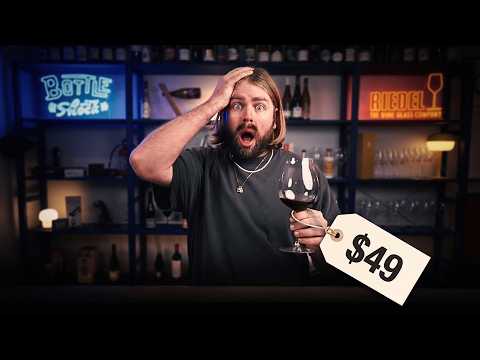 video
I Said Cheap Pinot Was Dead. Then I Tasted This.
A winemaker, a wine professional, and a guy who just likes drinking sit down to blind taste six wines from Australia's emerging producers — three whites, three reds, all under $50. What followed was one of the most humbling tastings we've done on this channel. We got varieties wrong. We overestimated prices. One wine had all three of us convinced it was something it absolutely was not. And we walked away having spent more money than any of us expected, because the quality across the board was ge
 video
Does Old Wine Taste Better?
We talk a lot about aging wine. Cellar it. Give it time. Let it develop. But does it actually work? Do aged wines genuinely taste better than when they were young? We've heard your feedback — when we taste current releases, we can only judge what's in the glass right now. We can guess where a wine might go, but we can't prove it. So Different Drop sent us six wines they've aged in their own cellars to put it to the test. Six wines. All aged. All blind. No prices, no labels, no context. Just the
 video
It's Not the Grapes. It's the People.
This episode is less about crisis and more about the people who keep this whole thing running — because after weeks of mousiness, berry split, broken equipment, and 4am starts, this is the week where it all just… worked. And the reason it worked is the people. Laura's in the lab testing residual sugar by hand because we don't have a $50,000 machine. Stove's doing weekend pump-overs solo and restarting a stuck Fiano ferment. Jess is bouncing between forklift, lab work, and bottling line in a sing
 video
The Mousiness Molecule: How It's Actually Made
I said enzymes were implicated in our mousiness problem. People lost it. Polite emails. Not-so-polite texts at night. Enzyme manufacturers, winemakers, and industry people letting me know exactly how wrong they think I am. So I figured I wasn't being clear enough. This video is the full science — start to finish — of how mousiness actually forms at a molecular level. No hand-waving. No opinions. Just the chemistry. Here's what we walk through: The industry can largely agree on what mousiness is
 video
Brendan Got Yelled Out of Our Biggest Client
First time the three of us have sat down together in 2026. It was overdue. Henry asks a question that's been bugging him: does he actually need to know the technical stuff to be good at selling wine? Because the way he sells and the way Brendan sells and the way Noah sells are three completely different approaches — and they all work. Just not on the same people. And sometimes not at all. Which brings us to the story of the time Brendan got yelled out of our biggest account in the country. Nick's standing there watching his number one client implode. Trent's in the corner thinking it's the funniest thing he's ever seen. Noah rolls up to two guys with their heads in their hands at the pub afterwards. It's become an annual retelling and honestly it deserved to be on camera. We get into a lot this episode: → Ethos vs accuracy in wine sales — do you need the stats or just the relationships? → Why Adelaide is the most relationship-driven market in Australia → How our three-tier sales app
 video
What Happens When a Vineyard Gets 48 Hours of Rain
One phone call changed everything. Rampant berry split across our Clare Valley vineyard. Every plan we had for red wine this year — Sangiovese, Nebbiolo, Barbera, Dolcetto — was thrown out the window in 48 hours. Berries cracked open like little Pac-Men, botrytis already moving in, and we're at least three weeks from ripeness. This is the episode where vintage 2026 stopped being fun. We rallied in two hours flat — bins on a truck, drove to Clare, pivoted the Sangiovese program from red wine to rosé, switched from hand harvest to machine harvest, and got fruit off the vine before disease could take hold. But the bigger question is what happens to everything else that's still hanging. Then I drove to the Riverland expecting the worst — and found the opposite. Sandy soils, competitive cover crop, and barely a split berry in sight. The same rain. Completely different outcome. And the reason might be the one thing every viticulturist wants to rip out of their vineyard. This episode cov
 video
Guessing the World's Most Famous Wines by Taste Alone
The taste of place. Terroir. The idea that wine can express where it's from in the glass. It's one of the most romantic concepts in wine — but is it real? Can you actually taste it? We grabbed six wines from six of the world's most iconic regions, poured them blind, and put three tasters to the test. No labels. No clues. Just the glass. The lineup: → A champagne that made all three of us rethink our loyalties → A German Riesling that split the room on price by over $100 → A white Burgundy so neutral it had us checking for cork taint → A red that had us torn between Burgundy, Tuscany, Sicily and Etna → A Bordeaux that everyone got right — but nobody expected to be this elegant → A wine that one person called Barossa Shiraz, another called Tempranillo from Spain, and somehow they were both making sense Some we nailed. Some fooled all three of us. One wine sparked a genuine argument about whether it was faulty or just French. For each wine we guess the region, call a price, and say how
 video
The Pruning Mistake That's Killing Old Vines
Dylan Grigg is one of Australia's most respected viticulturists. He's just come back from speaking at a farming conference in Burgundy, traveling through the Jura, and he brought a suitcase full of ideas that challenge a lot of what we think we know about growing grapes. In this conversation we get into some big questions — and some uncomfortable answers. Do old vines actually make better wine, or are we romanticising the side effects of accumulated stress and poor pruning? Does deliberately stressing vines improve quality, or is that an oversimplification that's doing long-term damage? And why are French vignerons fermenting willow bark and spraying it on their vines? We cover a lot of ground: → What Dylan taught Burgundian farmers about managing heat stress — and what they're already dealing with that mirrors Australia → Why middle-aged vines in France are dying while the genuinely old vines survive — and what grafting methods have to do with it → The pruning problem — how decades
 video
$50,000 Worth of Wine. Here's What Went Wrong.
$50,000 worth of wine. 7,000 litres. Roughly 25% of our entire production. All potentially affected by mousiness — one of the most dreaded faults in winemaking. Two of us tasted it independently, on different days, in the same tank. Then it showed up in another. And another. And in a completely different vineyard's fruit. In this episode we break down exactly what went wrong, how we diagnosed it, and what we're doing to fix it — both the affected wine and the root cause. This is the confessional episode. What we think happened: → Oxidative handling went too far — we didn't account for the redox potential at low pH, meaning oxygen was far more reactive than we expected → A pectinase enzyme we'd been using was cracking open berries and flooding the ferment with amino acids — specifically lysine, a key precursor to mouse taint molecules → Our citric acid-based sanitiser (Bio Guard) may have been building biofilms and essentially training bacteria to survive at very low pH rather than k
 video
5 Wines Over $100. One Is $20. Can We Tell?
We flipped our favourite game. Instead of finding the expensive bottle, we tried to spot the cheap one. Six wines. Five of them over $100 — including Champagne, Burgundy, and some of Australia's finest. But one bottle cost just $20, and it was hiding in plain sight. The rules: taste blind, guess the price, decide how many bottles you'd buy. Simple enough — until the $20 wine started outscoring everything else. Featuring Mitch on his last day before heading to Germany, and a result that made us question everything we thought we knew about price and quality. #wine #winetasting #blindtasting #cheapvsexpensive #barossashiraz #champagne #burgundy #pinotnoir #australianwine #winereview Learn More About Us: https://bottleshock.tv/ We're Thirsty! Buy Us A Glass Of Wine!: https://ko-fi.com/wineforthepeople We're Thirsty! Buy Us A Glass Of Wine!: https://buymeacoffee.com/wineforthepeople WHAT WINE GLASSES DO WE USE? 🍷 Our FAVORITE Tasting Glass: https://geni.us/rYhO4 🍷 The ULTIMATE Bli
 video
Stop Serving Bad Natural Wine to New Drinkers.
Meet Allie — our new EU correspondent. She's a Texan who moved to Germany without speaking a word of German, stumbled into a vineyard job, completed a three-year winemaking apprenticeship in the Pfalz, and never left. Now she's working in sales and export and living right in the beating heart of German wine culture. In this first dispatch from Europe, we dig into: → Allie's wild path from Colorado School of Mines dropout to German winemaker (blame the free Coors brewery tours) → Why the Pfalz is the real centre of German wine culture — not the Mosel → Wine Paris vs ProWein: why importers are abandoning Düsseldorf and what Vinexpo is doing differently → The non-alcoholic wine boom — is it actually any good yet? → Bad natural wine is scaring off new drinkers — €14 for nail polish remover is not the way in → Why young people aren't engaging with wine and what the industry is getting wrong about approachability → Germany's apprenticeship system vs university — and why hands-on skills
 video
The Wine Fault That's Tearing Us Apart
Something's off in the cellar. Two of us tasted it — on different days, without telling each other — and picked the same tank. It might be mousiness. We can't replicate it every time, but we can't ignore it either. At 3.13 pH, 30°C and almost through ferment, we've got a decision to make. And we don't agree on what to do. We're putting it to you. The numbers are in the video — if you're a winemaker or a wine nerd, tell us what you'd do. We'll share what we actually did in the next episode. But that's not all that happened this week. Vintage is well and truly in full swing: → First Zibibbo pick is in — old vine fruit from Ashley Ratcliff's block → Fiano on skins for Esoterico — treating it like a red ferment with pump-overs and cap management → Why we're struggling to get colour in our orange wine — and Scott's Kiwi innovation to siphon CO2 out of closed fermenters → Open vs closed fermenters for skin contact — oxidative cap development and why it matters → Barrel fermentation experi
 video
Australian Nebbiolo Can't Beat Italian... Right?
Six Nebbiolos. Three from Australia. Three from Italy. All tasted blind. We wanted to see if Australian Nebbiolo could genuinely stand up to its Italian counterparts — including Barbaresco and wines from some of Piedmont's most respected producers. Prices ranged from $28 to $115. The results surprised us. Featuring wines from Luke Lambert, Denton, Moretti Langhe, and more — plus a deep dive into what actually separates Australian Nebbiolo from Italian: tannin structure, primary fruit, that earthy "wardrobe to Narnia" character, and whether ripeness is a strength or a crutch. If you love Nebbiolo (or you think you hate it), this one's for you. #nebbiolo #winetasting #blindtasting #australianwine #italianwine #barbaresco #barolo #piedmont #winecomparison #nebbiololover Learn More About Us: https://bottleshock.tv/ We're Thirsty! Buy Us A Glass Of Wine!: https://ko-fi.com/wineforthepeople We're Thirsty! Buy Us A Glass Of Wine!: https://buymeacoffee.com/wineforthepeople WHAT WINE GL