
The Chronicle
Latest dispatches
111 results across all types
 video
Why DuMOL Plants Pinot Noir at 3,600 Vines per Acre
Why plant Pinot Noir at such high density? At DuMOL in Sonoma, Chief Winemaker and Proprietor Andy Smith explains why the estate planted around 3,600 vines per acre, taking inspiration from the traditional vineyard spacing of Burgundy. He discusses the gamble involved, the distinctive character produced by the mature vines, and how natural shading keeps the soil and grapes cooler, helping to preserve acidity, aromatic character and colour. Watch the full interview with Andy Smith on Wine with Jimmy.
fromWine With Jimmy video
Inside DuMOL: High-Density Pinot Noir with Andy Smith
Join me at DuMOL in Sonoma’s Russian River Valley for a vineyard conversation with Chief Winemaker and Proprietor Andy Smith. Andy explains why DuMOL planted Pinot Noir at an unusually high density of around 3,600 vines per acre, taking inspiration from the traditional vineyard spacing of Burgundy. We discuss how dense planting and natural shading can help preserve acidity, aromatic character and freshness while reducing the need for irrigation. We also explore DuMOL’s preference for heritage Pinot Noir selections over Dijon clones, the cooling influence of the Petaluma Gap and Bodega Bay, and the importance of the Laguna de Santa Rosa, Goldridge soils, sandstone and clay. This is a detailed look at how vineyard design, vine material, climate and geology shape Pinot Noir in the Russian River Valley. Chapters 00:00 Introduction to DuMOL and Andy Smith 00:27 Why Plant Pinot Noir at High Density? 01:10 Burgundy-Inspired Vineyard Spacing 02:06 The Gamble Behind DuMOL’s High-Density Vi
fromWine With Jimmy video
Understanding Basque Wine: Txakoli, Mountains, Rivers and Soils
Explore the geography, topography and geology of the Basque Country wine region in northern Spain, including the coastal vineyards of Getaria, the Montes Vascos and the Ebro River Basin. For hundreds of exclusive wine education videos covering Spain, grape varieties, viticulture, climate, geology, wine regions and appellations, join the Wine with Jimmy Club: https://e-learningwine.winewithjimmy.com/program/wwj-club In this Mastering Spain video, I examine how the landscape, climate and soils of the País Vasco influence its vineyards and wine styles. The Basque Country contains a remarkable range of environments, from the wet Atlantic coast and the txakoli vineyards of Gipuzkoa and Bizkaia to the more continental conditions of Álava and Rioja Alavesa. I begin by locating the Basque Country and explaining the significance of the names País Vasco and Euskadi. I then divide the region into three principal geographical zones: the Atlantic Basin, the Montes Vascos and the Ebro River Basi
fromWine With Jimmy video
Asturias and Cantabria Wine Regions Explained
Asturias and Cantabria are two of the least-known wine regions in Green Spain. In this introduction to northern Spanish wine, I explore their location, Atlantic climate, rainfall, mountains and distinctive weather patterns. Continue learning about Spanish wine and explore more exclusive wine education videos in the Wine With Jimmy Club: https://e-learningwine.winewithjimmy.com/program/wwj-club I begin in Asturias, examining its position between Galicia and Cantabria and its relationship with the Cantabrian Sea, the Bay of Biscay and the Cantabrian Mountains. I then travel east into Cantabria, looking at Santander and the emerging wine regions of Costa de Cantabria and Liébana. In this video, I cover: • Where Asturias and Cantabria are located • The geography of Green Spain • The influence of the Atlantic Ocean and Cantabrian Sea • Temperatures and rainfall in northern Spain • The Cordillera Cantábrica and Picos de Europa • How the foehn effect influences vineyards • The locations
fromWine With Jimmy video
Albariño and Rías Baixas: Complete Guide to Galicia’s Famous White Wine
Discover the Rías Baixas wine region, Albariño and the five subzones of this famous appellation in Galicia, north-west Spain. In this complete guide to Rías Baixas wine, I explore the history, climate, soils, grape varieties and wine styles that define one of Spain’s most important white wine regions. Rías Baixas is best known as the home of Albariño, producing fresh, aromatic and often saline white wines shaped by Galicia’s cool Atlantic climate. For more videos like this and a whole lot more make sure to Join the Wine with Jimmy Club: https://e-learningwine.winewithjimmy.com/program/wwj-club In this video, I cover: What the name Rías Baixas means How to pronounce Rías Baixas The geography of Galicia’s Atlantic estuaries The origins and history of Albariño The Celtic, Roman and monastic history of the region Granite, schist and alluvial vineyard soils Galicia’s cool, wet maritime climate The traditional parral, or pergola, training system The five Rías Baixas subzones Rías Baixa
fromWine With Jimmy video
Galicia Wine Grapes Explained - Albariño, Godello, Mencía and More
Discover the grape varieties of Galicia, including Albariño, Godello, Mencía, Treixadura and the lesser-known native grapes of north-western Spain. In this Galician wine guide, I explore the principal white and red grape varieties found across Rías Baixas, Ribeiro, Valdeorras and Ribeira Sacra. I begin with Albariño, Galicia’s most famous grape, before examining Godello, Mencía and a fascinating collection of indigenous Galician varieties. I look at the origins, growing characteristics and wine styles of Albariño, including its relationship with Alvarinho in Portugal and its historic confusion with Riesling, Sauvignon Blanc and Albarín Blanco. I also explain how fermentation, lees ageing and oak can influence the style and ageing potential of Albariño wines. Moving beyond Albariño, I examine Treixadura and its importance in Ribeiro, followed by the remarkable revival of Godello in Valdeorras. I discuss why Godello is sometimes compared with white Burgundy and how it can produce comp
fromWine With Jimmy video
Andrew Murray on California Syrah: A Very Happy Accident | Winemaker Interview
In this interview, I speak with Andrew Murray of Andrew Murray Vineyards about his lifelong passion for Syrah and the happy accident that helped shape his career. Andrew explains how a misidentified Viognier cutting ultimately turned out to be Syrah, setting him on a path that would lead to Syrah accounting for around 90% of the winery’s production. We discuss why Syrah has remained California’s perennial “up-and-coming” grape variety, the challenges created by its ability to grow in so many different climates, and the remarkable diversity of styles found across Santa Barbara County. Andrew also explores the contrasting expressions of Syrah produced in Sta. Rita Hills, Alisos Canyon and Ballard Canyon, from peppery, meaty and briny wines inspired by the northern Rhône to riper styles reminiscent of Hermitage and Cornas. We also look at Andrew Murray Vineyards’ approach to working with different vineyard sites and blending them into Tous les Jours Syrah, an approachable, fruit-forwa
fromWine With Jimmy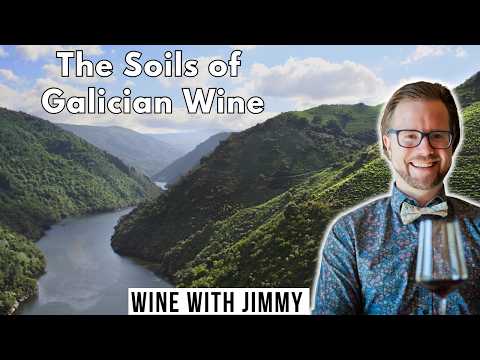 video
Galicia Wine Explained: Mountains, Rivers, Soils and Vineyard Training
Discover the geography and soils of Galicia, one of Spain’s most distinctive wine regions. I explore the mountains, rivers, vineyard landscapes and soil types that shape the wines of Rías Baixas, Ribeira Sacra and the wider Galician wine region. In this introduction to Galicia wine geography, I follow the Miño and Sil rivers through north-western Spain and examine the dramatic slopes associated with Galicia’s heroic viticulture. I also explain how granite, schist and slate influence the region’s vineyards, together with the traditional espaldeira and parral vine-training systems. Galicia’s landscape is defined by its Atlantic climate, mountainous interior, deeply cut river valleys and fragmented vineyard holdings known as minifundios. These conditions have encouraged growers to develop distinctive approaches to vineyard management. On flatter and more humid sites, the elevated parral system improves air circulation around the canopy, while steep river slopes are more commonly associa
fromWine With Jimmy video
Understanding Rioja: Geography, Climate and Terroir
Join me, as I take a closer look at the geography of Rioja DOCa, one of Spain’s most famous and important wine regions. In this video, I explore the three key parts of Rioja: Rioja Alta, Rioja Alavesa and Rioja Oriental, showing how the region is shaped by the Ebro River Valley, the Sierra de Cantabria, the Montes Obarenes, the Sierra de la Demanda and other important mountain ranges. I also visit some of Rioja’s key towns and wine centres, including Logroño, Laguardia, Haro, Alfaro and Calahorra, while looking at how altitude, soils, climate and topography influence the wines of Rioja. This is a useful introduction for anyone studying Spanish wine, WSET courses, Rioja DOCa, or the geography and terroir of northern Spain. 00:00 Introduction to Rioja DOCa 00:18 The three main parts of Rioja 00:54 Rioja Alta, Rioja Oriental and Rioja Alavesa 01:24 The Ebro River Valley 02:02 Sierra de Cantabria and Atlantic influence 02:48 Calcareous soils in Rioja Alavesa 03:16 Montes Obarenes and t
fromWine With Jimmy video
Inside Baron Longo: Chardonnay, Pinot Bianco and the Wines of Alto Adige / Südtirol
In this Wine with Jimmy interview, Jimmy speaks with Anton Felix Longo Liebenstein of Baron Longo in Alto Adige / Südtirol, one of Italy’s most distinctive mountain wine regions. They discuss the unique German-Italian identity of Alto Adige, the Baron Longo estate in Neumarkt/Egna, and how altitude, sunshine, mountain air and Lake Garda winds shape the region’s fresh, precise wine styles. The conversation covers key grape varieties including Chardonnay, Pinot Bianco, Pinot Nero, Lagrein, Schiava, Gewürztraminer and Solaris, as well as the debate around PIWI grape varieties, biodiversity in the vineyard, Kunekune pigs, and the shift from pergola to Guyot training systems. To watch the full interview, join the Wine with Jimmy Club here: https://e-learningwine.winewithjimmy.com/program/wwj-club A great introduction to Alto Adige wines, mountain terroir, Italian Alpine viticulture and the story of Baron Longo. Chapters: 00:00 Introduction to Baron Longo and Alto Adige Wines 00:33 Wher
fromWine With Jimmy video
Arne Bercher Explains German Wine, Kaiserstuhl Loess Soils and Flurbereinigung
In this interview, I speak with Arne Bercher of Weingut Bercher in Burkheim, Kaiserstuhl, one of Germany’s most distinctive wine regions. Arne explains the history of his 10th-generation family estate, the importance of Pinot Noir, Pinot Gris and Pinot Blanc in Kaiserstuhl, and why the region’s volcanic landscape and loess soils are so important for wine quality. The main focus of our discussion is Flurbereinigung — vineyard reorganisation — and how it has shaped the vineyards of Kaiserstuhl. Arne explains how land fragmentation developed through inheritance laws, why vineyard plots were reorganised, and how older approaches to terracing and bulldozing affected the natural structure of loess soils. This is a fascinating discussion for anyone interested in German wine, Kaiserstuhl terroir, VDP producers, vineyard management, loess soils, Pinot Noir, and the relationship between winegrowing, landscape and sustainability. Featuring: Arne Bercher, Weingut Bercher, Kaiserstuhl, Baden, G
fromWine With Jimmy video
WSET Level 2: How Grapes Grow and Ripen
In this WSET Level 2 wine lesson, I explain how grapes grow, ripen and develop throughout the annual vine cycle. Access all of my WSET Level 2 revision materials here: https://e-learningwine.winewithjimmy.com/course/e-learning-wine-level-2 We look at the key stages of vine growth, including budburst, flowering, fruit set, véraison, ripening, harvest and winter dormancy. I also explain how sunlight, warmth, water, nutrients and carbon dioxide allow the vine to carry out photosynthesis. You will learn: • The main stages of the annual vine cycle • How flowering and fruit set affect grape yields • What happens during véraison • How sugar, acidity, flavour and tannin change during ripening • The main parts of a grape and what they contribute to wine • Why most grape juice is clear • How black grapes can be used to make white wine • The difference between cool, moderate and warm climates • How climate influences acidity, alcohol, body, fruit flavours and tannin • Why grape varieties such
fromWine With Jimmy video
Mastering Spain: Climate, Weather and Wine Regions Explained
In this episode of Mastering Spain, I take an in-depth look at the climate and weather conditions that shape Spain’s vineyards and wines. Spain is an exceptionally diverse country, with Atlantic, Mediterranean, continental and subtropical influences. I explore how latitude, altitude, mountain ranges, coastlines, rainfall and temperature all affect grape growing across the country. I begin with Green Spain and the cool, wet regions of Galicia, Asturias, Cantabria and the Basque Country before moving inland to areas sheltered by the Cantabrian Mountains, including Castilla y León, La Rioja and Navarra. I then examine the Mediterranean climate of eastern and southern Spain, including Valencia, Murcia, Andalucía, Cataluña and the Balearic Islands. From there, I look at the extreme continental conditions of the Meseta and explain the importance of altitude and diurnal temperature range. The video also covers the subtropical climate of the Canary Islands, including Lanzarote, Tenerife, L
fromWine With Jimmy video
Orange Wine Explained: Simon Woolf on Amber Wine, Skin Contact and When It Becomes Orange
In this short extract from my full interview with Simon Woolf, author of Amber Revolution, we explore one of the most important questions in contemporary wine: what actually is orange wine? Simon explains why orange wine can be described as “white wine made like red wine”, how the term became popular, the difference between orange wine and amber wine, and why Georgia’s amber wine tradition remains so important. We also discuss when skin contact becomes orange wine, why colour is not the defining factor, and why fermentation on the skins is the key point of difference. This is especially useful for anyone studying orange wine, skin-contact white wines, amber wine, natural wine, Georgian wine, or the WSET Diploma D6 research assignment. Watch the full Simon Woolf interview and access the complete Orange Wine D6 module on Wine with Jimmy here: https://e-learningwine.winewithjimmy.com/course/d6-orange-wine You can also buy Simon Woolf’s book Amber Revolution directly from The Morning C
fromWine With Jimmy video
Saxony Wine Region Explained: Germany’s Most Easterly Vineyards
In this video, I continue my Mastering Germany series with a journey through Saxony, known in German as Sachsen, Germany’s most easterly wine region. Saxony may be small, with just over 500 hectares of vineyard, but it is one of Germany’s most distinctive and historically fascinating wine regions. In this video, I look at the key areas around Dresden, Meißen and Radebeul, exploring the Elbe River, steep terraced vineyards, granite and syenite soils, and some of the region’s most important grape varieties. We cover Pillnitz, Königlicher Weinberg, Meißner Kapitelberg, Kurfürstlicher Weinberg, Radebeul’s Goldener Wagen, Steinrücken, Wackerbarthberg and Schloss Proschwitz, one of Saxony’s most important producers and a VDP member. This is part of my deeper Mastering Germany series, available in full through the Wine with Jimmy Club. Join the Wine with Jimmy Club here: https://e-learningwine.winewithjimmy.com/program/wwj-club Chapters: 0:00 Mastering Germany and the Wine with Jimmy Clu
fromWine With Jimmy video
Spain’s Geography Explained: Mountains, Plains and Wine Regions
Join me for Part 1 of Mastering Spain’s geography, as I explore the mountains, plains, coastlines and key physical features that shape Spain and its wine regions. In this video, I look at Spain’s position on the Iberian Peninsula, the importance of the Meseta Central, the major mountain ranges including the Pyrenees, Sistema Ibérico, Sistema Central, Sierra Morena and Sistemas Béticos, as well as the key plains and depressions such as the Ebro Depression and Guadalquivir Basin. This is essential background for understanding Spanish wine, climate, altitude, regional identity and why Spain’s vineyards behave so differently from north to south and east to west. Part 2, covering the major rivers of Spain, is available inside the Wine with Jimmy Club. 00:00 Introduction to Mastering Spain Geography 01:01 Spain’s Location on the Iberian Peninsula 02:02 Spain’s Physical Geography and the Meseta 03:20 Spain’s Coastline, Seas and Islands 04:52 Spain’s Borders: France, Portugal, Gibraltar, C
fromWine With Jimmy video
The Highest Vineyard in the Mosel?
Join me in the Saar, a sub-region of the Mosel, as I visit the dramatic Schloss Saarfelser Schlossberg vineyard in Serrig. With steep slate slopes, castle views and some of the highest-altitude vineyards in the Mosel, this is one of the region’s most striking vineyard sites. #MoselWine #SaarWine #Riesling #GermanWine #WineEducation #WineWithJimmy
fromWine With Jimmy video
Rheingau Riesling Explained: Hallgarten, Geisenheim and Rüdesheim
In this episode of Mastering Germany, I continue the journey through the Rheingau, moving into the central west of this famous Riesling region. We explore Hallgarten, home to some of the highest vineyards in the Rheingau, including Jungfer and Schönhell, before moving through Oestrich, Doosberg, Lenchen, Winkel, Geisenheim and Rüdesheim. Along the way, I look at key vineyard sites such as Hasensprung, Schloss Vollrads Schlossberg, Rothenberg, Berg Kaisersteinfels, Berg Rottland, Berg Roseneck and Berg Schlossberg, explaining how slope, aspect, altitude, soils and the Rhine all shape the style of the wines. This is a deep dive into one of Germany’s most important wine regions, with a particular focus on Riesling, vineyard classification, geology and the changing role of cooler sites in a warming climate. The full Mastering Germany series is available in the Wine with Jimmy Club, along with additional deep dives, professional tasting notes, food and wine pairing content, and exclusiv
fromWine With Jimmy video
Sanford & Benedict: The Vineyard That Changed Santa Barbara Wine
I’m on location at Sanford & Benedict Vineyard in Santa Barbara, one of the region’s most important historic sites. First planted in 1971 by Richard Sanford and Michael Benedict, this vineyard helped shape the story of Pinot Noir and Chardonnay in Santa Barbara. Old vines, wide rows, gnarly training systems — and fruit that still produces wines with freshness, saltiness and real concentration.
fromWine With Jimmy video
Modern Spanish Wine History: Rioja, Phylloxera, Franco and the Rise of Spain’s Wine Regions
In this video, I continue my Mastering Spain series by looking at the modern history of Spanish wine, from the great 18th and 19th century pioneers through to phylloxera, railway expansion, political upheaval, wine regulation, Franco’s dictatorship and Spain’s modern revival. I look at key figures such as Don Manuel Quintano, Marqués de Riscal, Marqués de Murrieta, Josep Raventós and Miguel Torres, as well as iconic names including Rioja, Vega Sicilia, Codorníu, Cava, Jerez and Priorat. This is a story of innovation, crisis and recovery. Spain’s wine industry has been shaped by French influence, disease pressure, export booms, political instability, dictatorship, EU membership and a new generation of ambitious winemakers. Today, Spain remains one of the world’s great wine-producing countries, with more land under vine than anywhere else and an extraordinary range of styles across the mainland and islands. This video is part of my Mastering Spain series. The full series, including ex
fromWine With Jimmy video
Saale-Unstrut Wine Region Explained: Villages, Vineyards and Google Earth Tour
In this video, I continue my Mastering Germany series with a detailed look at Saale-Unstrut, one of Germany’s most fascinating and distinctive wine regions. Join the Wine with Jimmy Club here: https://e-learningwine.winewithjimmy.com/program/wwj-club I explore the villages, vineyards, rivers and landscapes that shape this small but important region, including Vitzenburg, Karsdorf, Freyburg, Goseck, Naumburg and Kaatschen. Using Google Earth, I look at how the Saale and Unstrut rivers influence the vineyard locations, and why the central Schloss Neuenburg area is so important to the identity of the region. Along the way, I cover key vineyard sites such as Schlossberg, Hohe Gräte, Edelacker, Dechantenberg, Steinmeister and Dachsberg, as well as important grape varieties including Silvaner, Riesling, Weissburgunder, Grauburgunder, Spätburgunder and Frühburgunder. This video is part of my wider Mastering Germany series on the Wine with Jimmy Club, where I go deeper into German wine reg
fromWine With Jimmy video
Why Fog Matters in Santa Barbara Wine Country #WSET #wsetlevel3
Jimmy here in Santa Barbara County, looking at one of the key weather patterns that shapes the wines of this part of California: fog. Because the mountain ranges north of Santa Barbara run east to west, cooling winds from the Pacific are funnelled inland through valleys such as Santa Maria, Santa Ynez and the Sta. Rita Hills. When that cool air meets warmer inland temperatures, fog can form across the landscape. For viticulture, this is hugely important. Fog helps lower temperatures, preserve acidity in the grapes, reduce sunlight and UV exposure, and contribute to the bright, fresh, leaner styles often associated with Santa Barbara County wines. #SantaBarbaraWine #CaliforniaWine #WineEducation #WineWithJimmy #SantaMariaValley #SantaYnezValley #StaRitaHills #Viticulture #WineShorts #WSET
fromWine With Jimmy video
Wine with Jimmy Partners with Local Wine School Network for WSET Support
Hello everybody, Wine with Jimmy here with some exciting news. Wine with Jimmy is partnering with the Local Wine School network. This is one of the leading wine educational networks within the UK. https://www.localwineschool.com/ This means that participating providers within the Local Wine School network are now offering Wine with Jimmy's e-learning portal for all students who sign up to the professional WSET courses. That means they'll access all of those really wonderful quizzes, multiple-choice questions, videos and revision support to help them on their WSET journey. I'm very excited about this. The Local Wine School network is really packed full of very wonderful, award-winning schools across the UK, and it's run fantastically by a lot of dedicated wine educators, who I know very personally and who are really good friends. So I know what it is to deliver these courses, and I know what it's like as a student also to take these courses, and having that support will be absolute
fromWine With Jimmy video
Georgian Orange Wine: Amber Wine, Qvevri and Skin Contact Explained #wine
In this short clip from my D6 Orange Wine module, Daria Kholodilina explains one of the biggest challenges in marketing Georgian amber wine internationally: the confusion around orange wine, skin-contact white wine and qvevri wine. Not all qvevri wine is orange wine, and not all orange wine is made in qvevri. But Georgia’s traditional winemaking methods offer some of the most fascinating examples of skin-contact white wines in the world. For the full Wine with Jimmy D6 Orange Wine module, including producer interviews, winemaking context and exam-focused guidance for WSET Diploma students, visit: https://e-learningwine.winewithjimmy.com/course/d6-orange-wine #OrangeWine #AmberWine #Qvevri #GeorgianWine #SkinContactWine #WSETDiploma #D6Wine #WineWithJimmy
fromWine With Jimmy